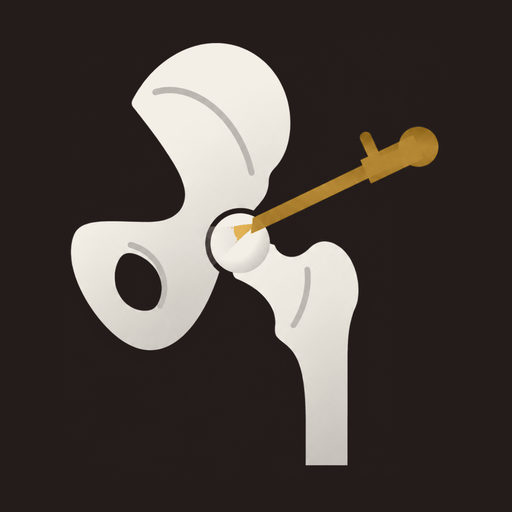
Femoral-Acetabular Impingement Syndrome (FAIS)
A motion-related disorder in which abnormal contact occurs between the proximal femur and the acetabular rim that causes pain in the hip or groin (sometimes includes the back, buttock or thigh). Other symptoms such as mechanical symptoms (clicking, catching, or locking), reduced joint mobility (stiffness or restricted range of motion) and joint instability have been reported as well.
Characterized by a combination of:
- Symptoms
- Clinical Signs
- Relevant imaging findings
- Relevant diagnostic findings (See Diagnosis Section for more information)
The bone morphology within FAIS refers to the abnormal bone shape. An individual can have abnormal bone morphology (such as Cam or pincer morphology) and still be asymptomatic, that is not considered FAIS.
Cam morphology is characterized by loss of normal sphericity at the femoral head-neck junction, most commonly in the anterosuperior region. During hip flexion and internal rotation, the nonspherical femoral head enters the acetabulum and produces shear forces at the chondrolabral junction. This may result in chondrolabral separation, acetabular cartilage delamination, and secondary injury to the labrum.
Pincer morphology refers to excessive or abnormally oriented acetabular coverage. This may be focal, global, or associated with acetabular retroversion. Repetitive contact between the acetabular rim and femoral neck primarily compresses the labrum and may lead to labral degeneration, rim injury, and posteroinferior contre-coup cartilage damage. Many patients have combined cam and pincer morphology.
The development of symptoms depends not only on osseous morphology, but also on hip motion, activity demands, repetitive loading, and femoral and acetabular orientation. Labral tears and chondral defects frequently coexist with FAIS and may represent progressive consequences of abnormal mechanical contact. Cam morphology is also associated with an increased risk of hip osteoarthritis, although many individuals with abnormal morphology remain asymptomatic.
References
- Griffin DR, Dickenson EJ, O’Donnell J, et al. The Warwick Agreement on femoroacetabular impingement syndrome: an international consensus statement. Br J Sports Med. 2016;50(19):1169-1176. Read on Rounds
- Ganz R, Parvizi J, Beck M, Leunig M, Nötzli H, Siebenrock KA. Femoroacetabular impingement: a cause for osteoarthritis of the hip. Clin Orthop Relat Res. 2003;(417):112-120.
- Beck M, Kalhor M, Leunig M, Ganz R. Hip morphology influences the pattern of damage to the acetabular cartilage: femoroacetabular impingement as a cause of early osteoarthritis of the hip. J Bone Joint Surg Br. 2005;87(7):1012-1018. Read on Rounds
- Agricola R, Heijboer MP, Bierma-Zeinstra SMA, et al. Cam impingement causes osteoarthritis of the hip: a nationwide prospective cohort study. Ann Rheum Dis. 2013;72(6):918-923. Read on Rounds
- Frank JM, Harris JD, Erickson BJ, et al. Prevalence of femoroacetabular impingement imaging findings in asymptomatic volunteers: a systematic review. Arthroscopy. 2015;31(6):1199-1204. Read on Rounds